The finals of the 14th "Challenge Cup" Qin Chuangyuan China College Student Entrepreneurship Plan Competition were held at Xi'an Jiaotong University from October 29th to November 3rd. Our university secured a gold medal for the first time with a total of five medals heralded as a groundbreaking achievement.
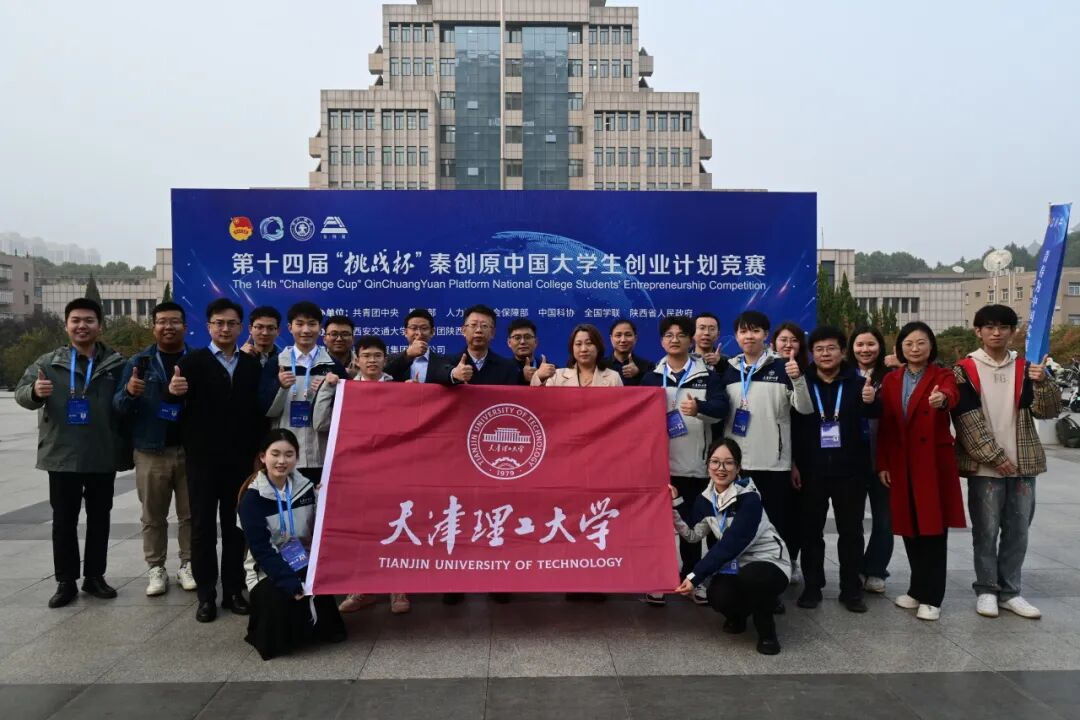
Co-hosted by the Central Committee of the Communist Youth League, the Ministry of Education, the Ministry of Human Resources and Social Security, the China Association for Science and Technology, the All-China Students' Federation, and the People's Government of Shaanxi Province, the competition has attracted the participation of over 3 million university students with more than 390,000 entrepreneurship project submissions since its launch in June 2024.
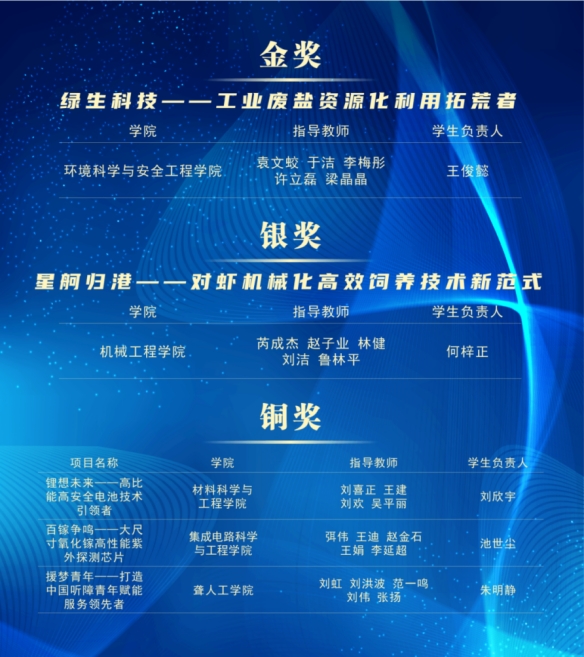
After progressing through university-level preliminaries, provincial semi-finals and the initial national finals review, two projects from our university advanced to the final oral defense round of the national finals. Among them, "GreenSyn Tech – Pioneer in the Resource Utilization of Industrial Waste Salt" won the national gold award, and "Prawning Vessel returning to Port – A New Paradigm for Mechanized and Efficient Prawn Farming Technology" won the national silver award. Additionally, National bronze awards were also secured by three projects: "Li-Future – Leader in High Specific Energy and High Safety Battery Technology", "A Hundred Galliums Contend – Large-size Gallium Oxide High-Performance Ultraviolet Detection Chip", and "DYE (Deaf Youth Empowerment) – Building China's Leading Empowerment Service for Hearing-Impaired Youth" .
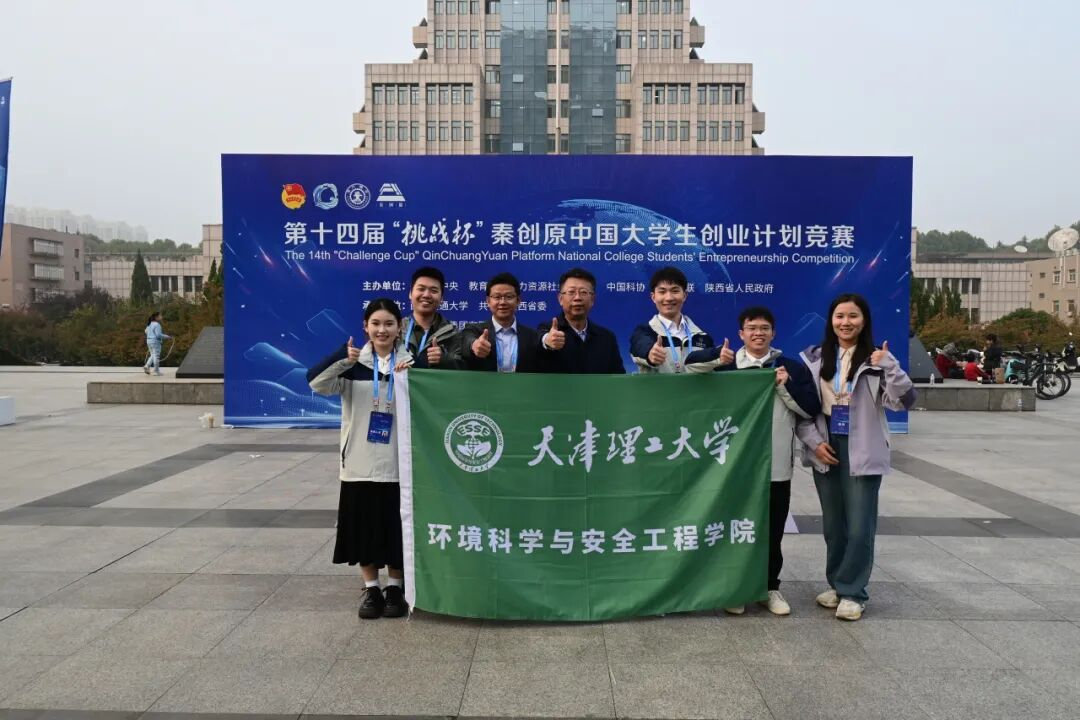
GreenSyn Tech - Project Introduction: Pioneer in the Resource Utilization of Industrial Waste Salt
Addressing national strategic needs and tackling major engineering challenges and industrial technology issues, the GreenSyn Tech team developed catalysts, fixatives, and adsorbents. These innovations resolve key scientific problems in the thermal treatment of industrial waste salts, such as low organic removal efficiency, high energy consumption, and poor system operational stability. The team achieved cost-effective, high-efficiency organic removal with rates exceeding 99%. Processing one ton of waste salt reduces carbon emissions by 50.3 kg, thereby contributing significantly to the national ecological civilization goals and supporting the green, low-carbon, high-quality development of China's chemical industry.
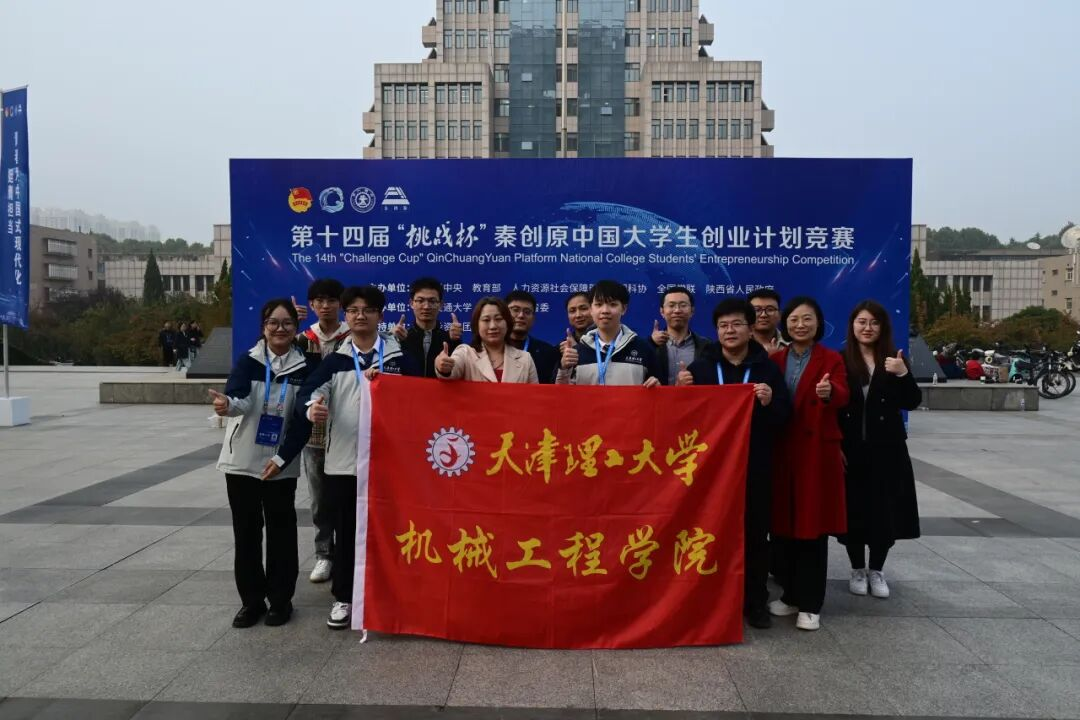
Prawning Vessel returning to Port – Project Introduction: A New Paradigm for Mechanized and Efficient Prawn Farming Technology
Aiming to modernize fisheries and promote rural revitalization, this project addresses the typical challenges of small-scale individual shrimp ponds, high feeding frequency, and low intelligence level of farming equipment by creating a mechanized, planetary distributed shrimp farming model. Its implementation will enhance feeding accuracy and shrimp farming efficiency, enabling automated and highly efficient shrimp cultivation. The project is expected to benefit both new and established farmers: on one hand, attracting more young people to the shrimp farming industry; on the other, alleviating the burden on elder farmers, thus securing their continued involvement and more stable incomes.
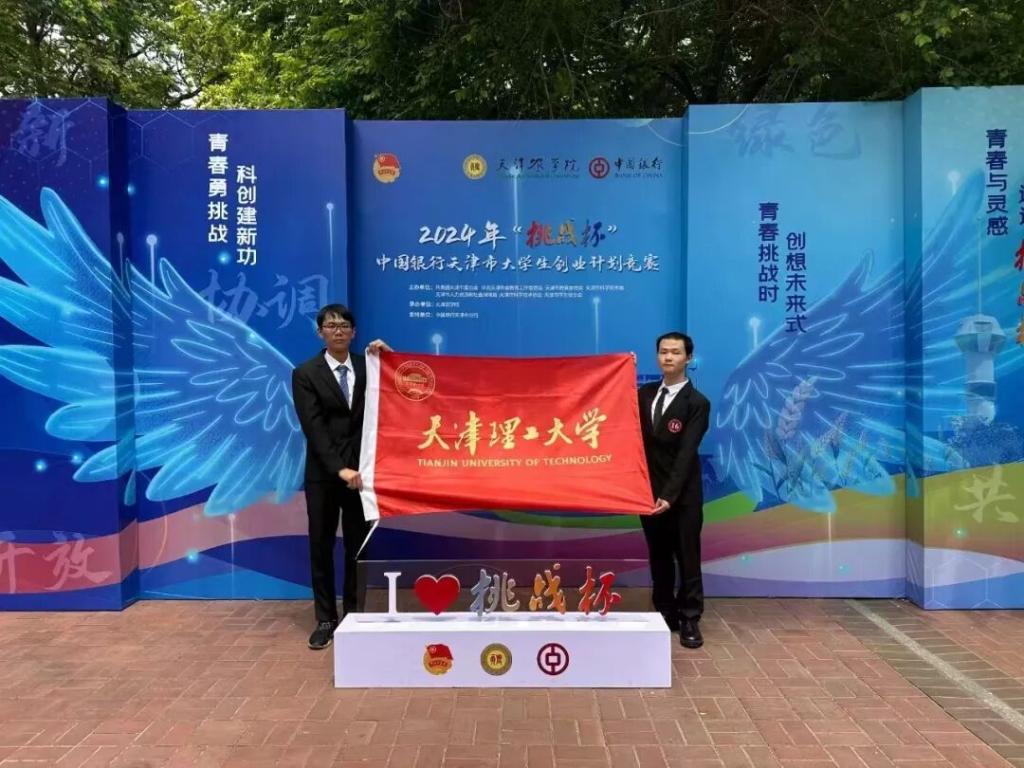
Li-Future - Project Introduction: Leader in High Specific Energy and High Safety Battery Technology
This project addresses issues in secondary batteries with energy densities exceeding 400 Wh/kg (e.g. all-solid-state batteries, metal-air batteries), such as poor cycling stability, dendrite formation, and inferior low-temperature performance of metal anodes, which lead to reduced battery life and safety concerns. It introduces a multi-level gradient pore structure design and a "top-down" lithium-ion deposition strategy, successfully developing a multi-level gradient porous metal anode that enables uniform lithium deposition. The project has advanced new material preparation method and optimized production processes, thus achieved mass production of materials like CuSn and GaInSn@Cu based on multi-level copper scaffolds with cost reduction. It effectively suppresses volume expansion/contraction of electrode materials during charge/discharge and extends cycle life to over 2,000 hours in ultra-fast charging battery systems which results in a high-safety, high-stability, low-cost metal anode solution for next-generation high-specific-energy batteries.
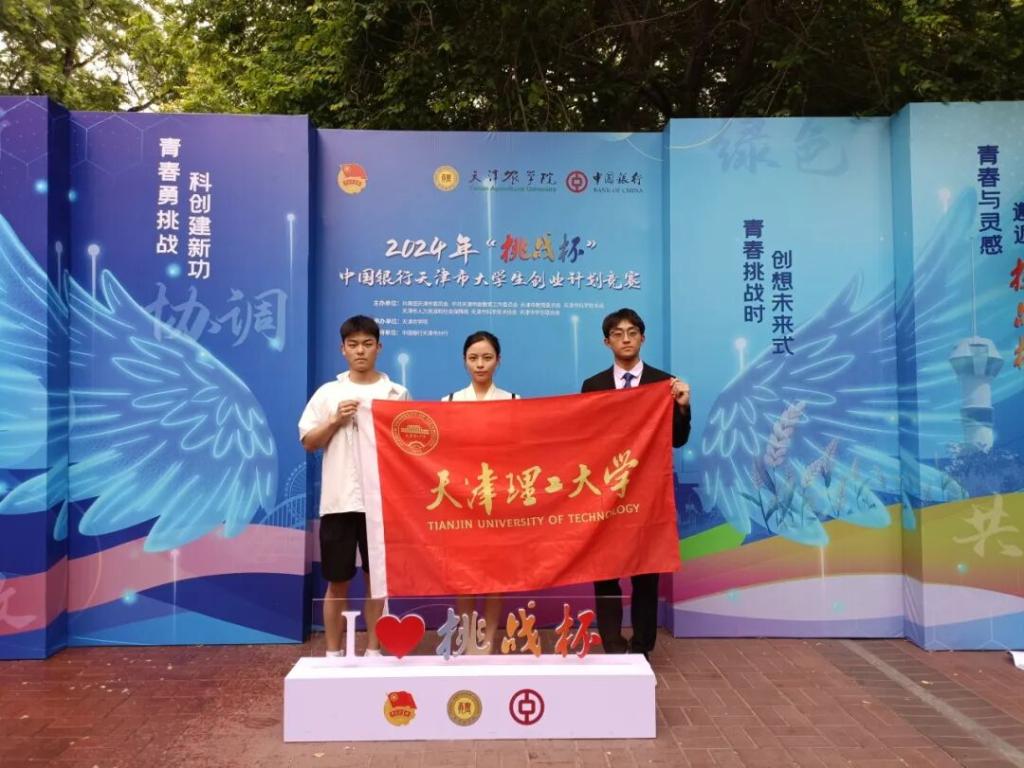
A Hundred Galliums Contend – Project Introduction: Large-size Gallium Oxide High-Performance Ultraviolet Detection Chip
This project addresses the urgent need for gallium oxide-based solar-blind ultraviolet detection technology by focusing on core scientific challenges such as defects and doping mechanisms in gallium oxide single-crystal substrates and epitaxial films, and the interrelationships among microscopic electronic structure, thin-film physical properties, and device performance. By achieving high-quality growth of 4-inch gallium oxide epitaxial films and innovatively designing core device structures, the project has successfully developed a new generation of high-performance gallium oxide-based ultraviolet detectors. These detectors show great application potential in various fields including environmental monitoring, biomedicine, and industrial manufacturing.
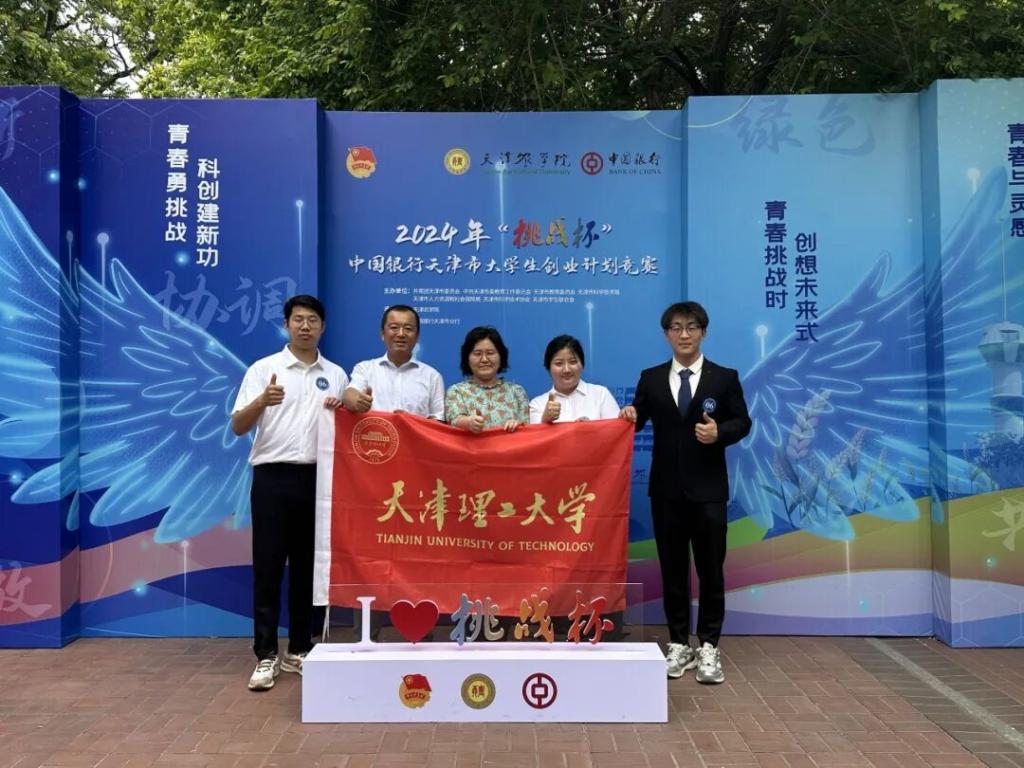
DYE - Project Introduction: Building China's Leading Empowerment Service for Hearing-Impaired Youth
Intended for empowering hearing-impaired youth in China, DYE is a core educational initiative created by a student public welfare team from Technical College for the Deaf. Through key components such as offline lectures, personalized tutoring, non-profit sign language teaching, class-style online courses, "top student notes" and integration-themed activities for disabled and non-disabled individuals, the project provides comprehensive academic tutoring and self-improvement services for hearing-impaired students. It has established collaborations with multiple foundations, public welfare organizations, and enterprises to help hearing-impaired students build confidence in self-expression, facilitate personal growth, and actively integrate into society.
Since the launch of the competition, the University Party Committee has placed great emphasis on it and frequently inquired about the teams' preparation progress. Fully integrating resources, the University Youth League Committee and the School of Innovation and Entrepreneurship have collaborated with relevant departments and schools and actively prepared for the competition by providing comprehensive and systematic training and guidance involving project selection, cultivation, and presentation. In the future, the University Youth League Committee will further foster an innovative and science-driven atmosphere, inspiring the young minds of TUT to keep pace with the times and enhance their awareness and capabilities in innovation, creativity, and entrepreneurship so as to continuously promote the high-quality development of the university's innovation and entrepreneurship education. Thriving endeavors are directed to educate and guide TUT youth to aspire to serve the country and strive to shoulder responsibilities in building a strong nation.