On June 15, our university welcomed the 2025 “Chinese Bridge”Canadian Educators Delegation. The event was attended by Wang Tie, Member of the Standing Committee of the Party Committee and Vice President, along with senior officials from the International Exchange Office and representatives from the School of Management.
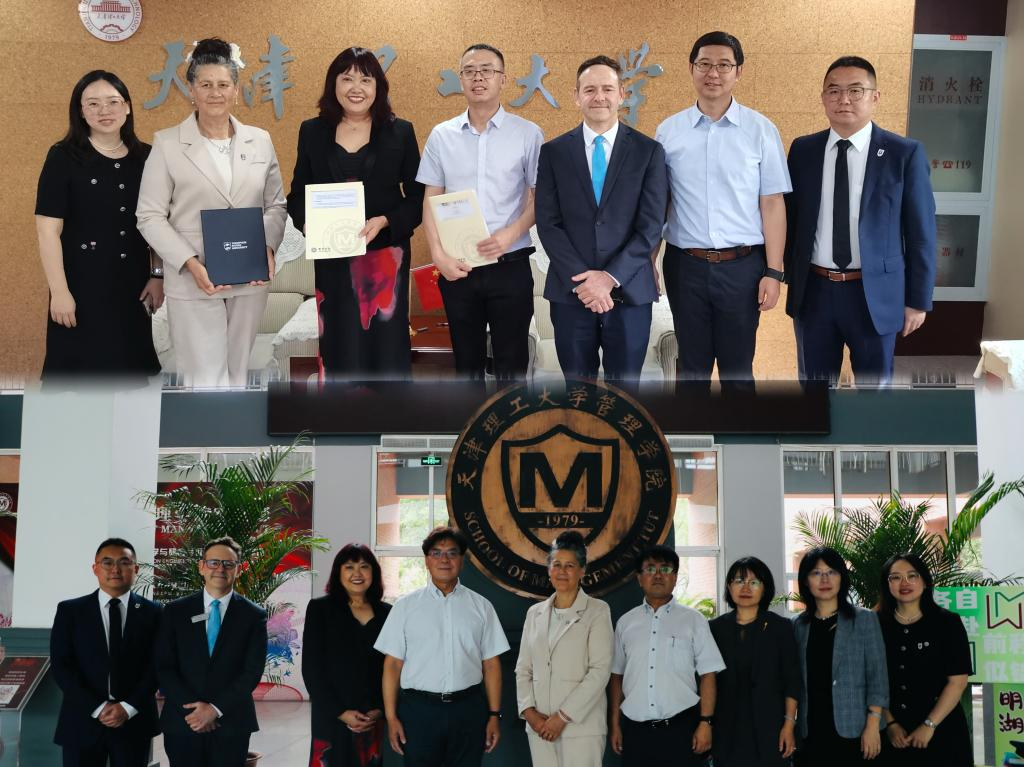
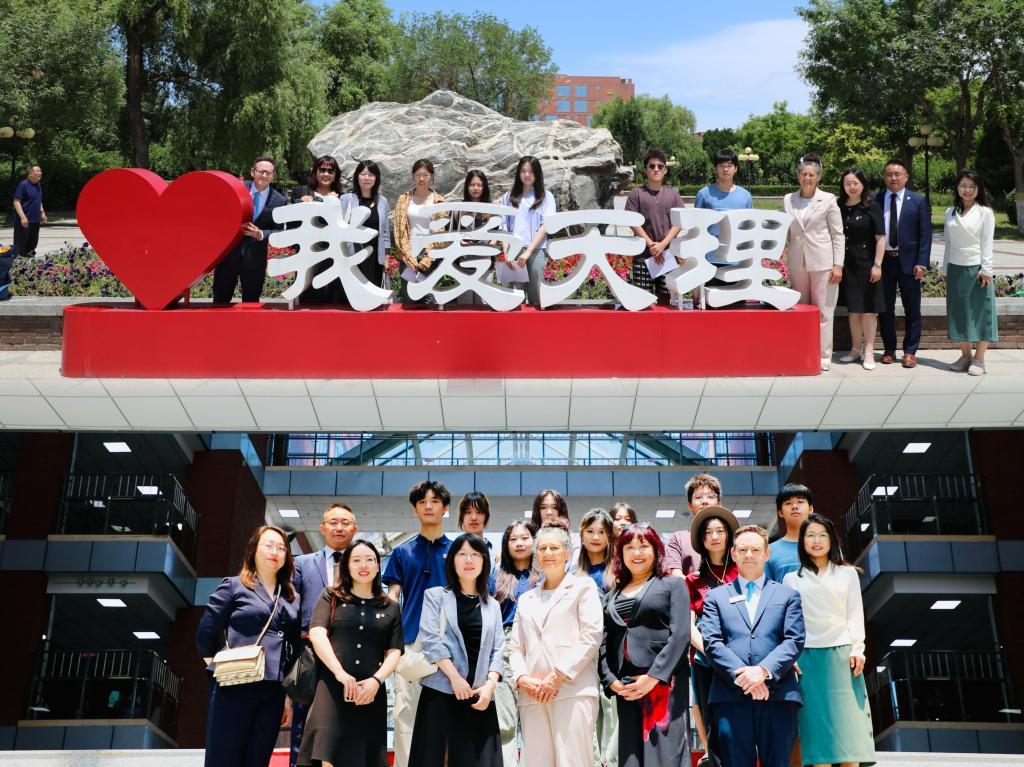
Vice President Wang Tie extended a warm welcome to the delegation and expressed sincere gratitude to Canada’s Thompson Rivers University for its years of sincere cooperation with our school. He voiced his hope for continued and strengthened collaboration to advance educational endeavors in both China and Canada, further contributing to the friendship and cooperation between the two universities. The delegates immersed themselves in the campus to experience the unique educational and cultural environment. They visited the modern teaching buildings, the well-stocked library, the dynamic student activity center, and the comprehensive sports facilities, showing particular interest in the unique Woodcarving Museum. Throughout the tour, the delegates expressed admiration for our school’s appealing campus environment, rich cultural ambiance, and accomplishments in talent development, noting that these are clear indicators of our high-quality educational advancement.
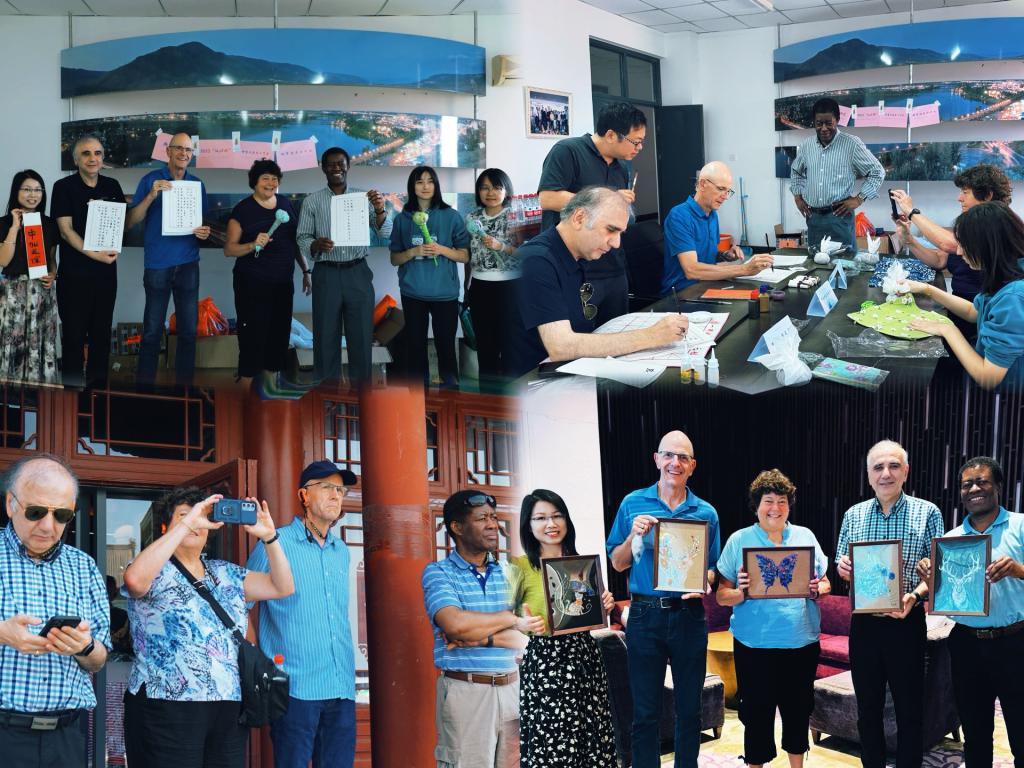
During their stay in Tianjin, the delegates engaged in immersive experiences of several Chinese intangible cultural heritage items. In a Tuan-shan(round fan) painting workshop, they tried their hands at drawing traditional patterns, appreciating the refinement and subtlety of Eastern aesthetics. In a calligraphy session, they carefully practiced wielding the Chinese brush, sensing the rhythm of writing and the depth of Chinese culture amidst the scent of ink. A demonstration and hands-on experience of the arts of luodian(mother-of-pearl inlay) and diancui(kingfisher feather art) left them in awe of the exquisite craftsmanship and the majestic beauty of the artworks. These vivid and profound activities truly embodied the “Chinese Bridge” spirit, allowing the Canadian educators to connect directly with the pulse of traditional Chinese culture and building a bridge connecting our hearts across the Pacific.
The delegates unanimously agreed that the experience significantly enhanced their understanding and appreciation of Chinese culture, describing it as a “cultural dialogue transcending language and national boundaries.” They expressed eagerness to share their experiences and insights in their classrooms back in Canada, hoping to inspire more Canadian students to appreciate the charm of Chinese excellent traditional culture and sparking enthusiasm for learning Chinese and understanding China, thereby realizing the “Chinese Bridge’s” mission of serving as a bridge connecting language, culture, friendship, and hearts. This visit not only enhanced their understanding of our educational practices but also sowed promising seeds for future Sino-Canadian educational cooperation and cultural and people-to-people exchanges.
The delegation will subsequently proceed to Xiqing District in Tianjin and Beijing for further cultural activities, delving deeper into the profoundness of traditional Chinese culture and the vitality of modern development.