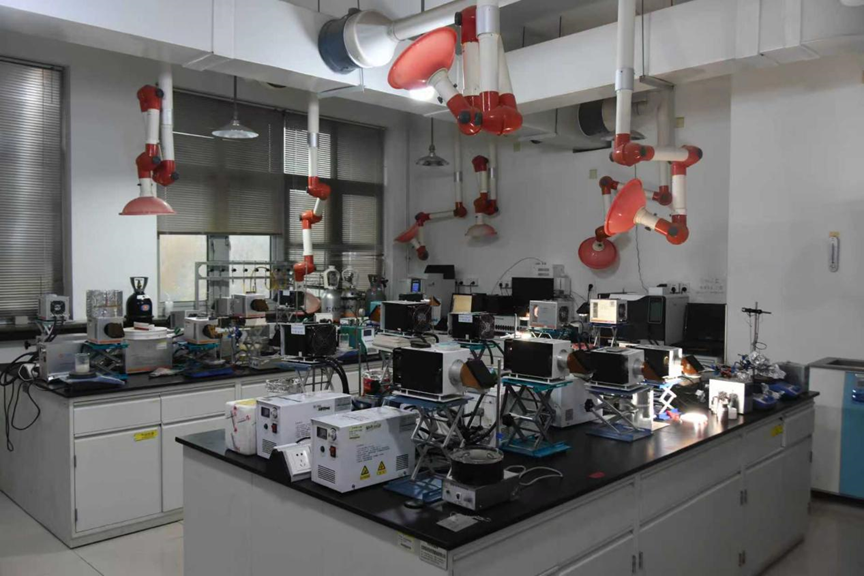
The Tianjin Key Laboratory of Optoelectronic Display Materials and Devices was established in 2004 and is affiliated with Tianjin University of Technology. The laboratory covers an area of 4,000 square meters and has total assets valued at over 20 million yuan. It evolved from the Institute of Materials Physics, founded in 1988 and led by Prof. Xurong Xu, a pioneer in the field of luminescence in China. Through integration, development, and international collaboration, it has become a research and talent cultivation base focused on functional materials and display devices in optics, electronics, and nanotechnology. Prof. Tongbu Lu currently serves as the director, and Prof. Yadong Li serves as the chairman of the academic committee. The laboratory currently has 53 permanent staff members, including 24 with full senior professional titles and 16 with associate senior professional titles, all holding doctoral degrees.
The key research directions include:
1. Energy materials for photocatalysis and electrocatalysis
The team aims to develop high-efficiency and low-cost catalysts for the activation and catalytic conversion of small molecules. The topics cover the design and controlled synthesis of molecular-based homogeneous catalysts, heterogeneous nanocatalysts, and single-atomic site catalysts. The research is focused on high-efficiency water splitting and hydrogen production, carbon dioxide reduction, activation and conversion of nitrogen and methane molecules, aiming to develop sustainable clean energies.
2. Advanced optical/electronic materials and devices
Starting from material design and device assembly, the team aims to develop new-generation optical/electronic devices. The topics cover optoelectronic synaptic devices, optoelectronic sensor devices, organic electroluminescent materials and devices, organic/inorganic composite optoelectronic devices, organic thin-film solar materials and devices.
3. Biomedical Information Materials and Devices
This team is focused on using the optical/electronic information functional groups in organic, inorganic, polymeric, and composite materials to investigate the interactions between these functional groups and bioactive species. The topics cover the design of novel small-molecule and polymer fluorescent probes, as well as exploring their applications in biochemical detection and biomedical imaging. The key directions include the design of novel fluorescent dyes, low-toxicity quantum dot materials, fluorescent probes for metal ions, probes for highly reactive oxygen species, cell labeling, and fluorescence imaging detection.
In recent years, the laboratory has undertaken projects including those under the National Key R&D Program, major, key, and general projects of the National Natural Science Foundation of China, and key projects of the Tianjin Natural Science Foundation. The research achievements have been recognized with one First Prize of the Tianjin Natural Science Award, as well as Second Prize of the Tianjin Science and Technology Progress Award, and Third Prize of the Tianjin Technology Invention Award. The laboratory publishes over 100 papers annually on average, and has obtained multiple invention patents. It has established stable collaborative relationships with top-level universities and research institutions both domestically and internationally.